𝔏𝔞𝔳𝔢𝔫𝔡𝔢𝔯
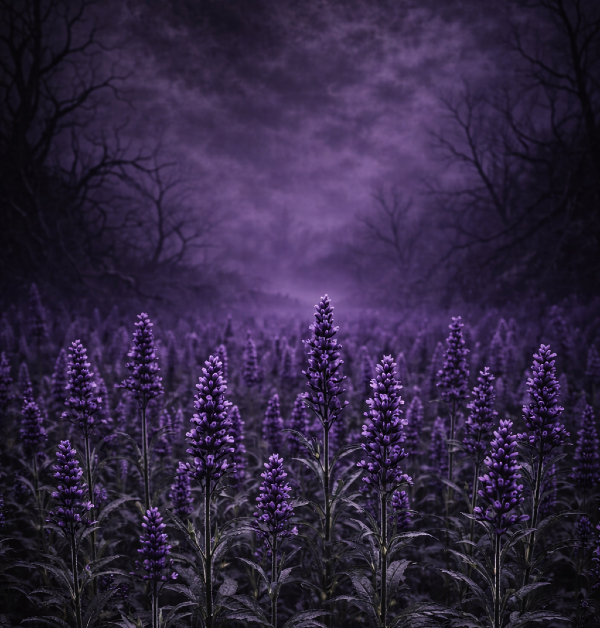
𝔏𝔞𝔳𝔢𝔫𝔡𝔢𝔯 was never just a color to me. Before I said yes to witchcraft—before I said yes to myself—it was something I loved quietly. Not hidden exactly, but held in a way that felt almost shameful, like it belonged to a part of me I wasn’t allowed to fully inhabit yet. I performed something else. Masculinity. Hardness. Red and black. Things that felt safer to show. But lavender stayed. Not loudly. Not insistently. Just there. Waiting.
Now, looking back from where I stand in my practice, I understand what it was. Lavender was a threshold. Not into femininity as performance, but into something more precise—my non-binaryness, my softness that is not weakness, my ability to hold multiple states of being at once without collapsing into one. Black and lavender became the language of that. Black is the field. The void. The container that holds everything without judgment. It is protection, warmth, death, openness. It is the part of me that can absorb, conceal, stabilize. Lavender does not replace it. It enters it. A specific kind of lavender—soft, dusty, almost quiet—moves through that black and makes something visible without needing to announce itself. It does not scream. It does not demand. It marks.
The way I wear lavender is the way I express that part of myself. Not everywhere. Not as totality. But in points. My nails—black, except for the ring fingers, lavender. Enough to be seen. Enough to be intentional. Enough to say: this is here, and it matters. Lavender is not excess. It is precision. It is the part of me that refuses to be erased, but also refuses to be flattened into something obvious or easily categorized. It is softness that knows exactly where it is placed. And that is where it begins—as color, as accent, as a way of arranging the self. But it does not stay there.
Lavender is not something I reach for when I need to cleanse. It is something I move into. I use it in ritual baths, yes—but not just to wash something away. It doesn’t strip. It doesn’t force. It creates a condition where things that do not belong simply cannot hold. It softens the space until it becomes inhospitable to what should leave, and welcoming to what should remain. The same is true in how I place it. Lavender exists in my home as accent. Not everywhere. Not overwhelming. Not as total atmosphere. A space cannot be only rest—it has to be lived in. But lavender appears in points. A wall. A surface. A small object—placed where the eye will find it without trying.
And when it is found, something shifts. People don’t always notice it directly, but they feel it. They feel safe. They feel they can rest. They feel they could fall asleep here. This is lavender working. It does not announce itself. It does not dominate the room. It waits to be noticed. And when it is, it creates a moment of pause—a moment of softness—a moment where the body is allowed to settle without being told to. Even in the plant itself, this is how it behaves. Some lavenders are soft in a way that feels almost unreal—like holding something that was not meant to be solid. The leaves give, the scent lifts, and for a moment there is a kind of temporary holding. Not a place to stay forever. A place to pass through. A pillow—but only for a moment. Lavender does not keep you. It allows you to rest, and then it lets you go.
This is why I use it in smoke, why I use it in cleansing, why I use it to prepare a space for spirit. Depending on how it is approached, it can remove or it can invite. It can clear what lingers, or it can make a space precise enough for something to arrive. And I do not work with it only externally. I consume it. I have eaten it raw. I drink it in tea. I take it in through scent, through taste, through breath. Because to work with something like this, it cannot remain outside of you. It has to move through you. And over time, it does. It becomes something you can recognize not just as a plant—but as a condition you can enter.
Lavender is often spoken about as if it were only gentle. And it is. But it is also exact—and it can be more damaging to what is not supposed to be in your presence. It reads as clean to me. Not sterile. Not empty. But clean in the sense that it clarifies what is present and what is not meant to remain.
In the most known or shared ways historically and grimoire-Alis generally done with water that has been sanctified in some way. In Hellenic tradition, it is sanctified by dropping or dipping a burning bay laurel leaf into the water to extinguish the flame. Other tradition use three basic herbs that interchange once and awhile those are (marjoram, mint, bay laurel, and rue) in the more demon- leading it’s steadily the first three harvested alongside astrological correspondence . Introducing lavender or just using a bundle of lavender itself has proved to me just as effective if not better then the above mentioned especially in instances of conjuring for the first time. And the more lavender that is brought in, the more that clarity intensifies. There are ways I have worked with lavender that move beyond what people usually associate it with. I have used lavender in moments of interacting with colic spirits—when something is too present, too loud, too insistent—and it needs to be brought into a state where it can rest.
I have held fresh lavender under my tongue. I have let it sit there and move through my speech. And from that place, I have spoken to a spirit—whether in English or in something else that comes through—to subdue it, to quiet it, to bring it into stillness. This is temporary, yes. But it can be scaled. A small amount of lavender brings a short rest. A greater amount extends that rest. A fully saturated presence can hold that state longer—long enough to move what has been subdued into another place, another object, another condition. Lavender does not erase. It subdues. It reduces the volume of something until it can be handled.
This is where lavender enters into exorcism. Not as something violent. Not as something that tears or forces. But as something that changes the conditions so completely that what should not remain can no longer sustain itself in the same way. It becomes a field that quiets. And that field can be increased. A small bud held in the hand creates one level of presence. A branch creates another. A full plant brought into the space shifts it further. Smoke does this. Scent does this. Ingestion does this. The more lavender is allowed into the body and the environment, the more the space aligns with what lavender is—clean, precise, and inhospitable to what does not belong.
This is where lavender’s kindness is misunderstood. Because it is kind. Because it is soft. Because it does not present itself as force. But in that softness, it has the ability to put things to rest—temporarily, or in some cases more permanently—by bringing them into a state where they can no longer act in the way they were before. Lavender is not passive. It is a condition. And when that condition is entered fully—through scent, through taste, through presence—it becomes something that can be carried, expanded, and directed within a working. Not just as a plant—but as a spirit that alters the state of everything around it.
There are also ways I work with lavender that lean into older, folk methods—but with lavender brought in as a spirit of rest and subduing, as we’ve been speaking about. One of those is the old trick of placing a petition with a person’s name into the shoe. The foot matters. The right foot persuades. The left foot dominates. And lavender changes how that work behaves. I will write the name on a piece of petition paper, fold it around a piece of lavender—or soak the paper in lavender oil—and place it into the shoe. That addition brings in a current of rest. Not as passivity. As a relaxing of grip.
If someone is on you—bothering you, pulling at you, holding onto you in ways that linger—you place that work in the right foot, and lavender begins to relax their hold. You stop walking with them. Their presence is still there, but the grip is loosened. That’s the phrase for it. The grip is relaxed. Lavender does what it always does—it rests, it softens—but here it is resting the influence someone has on you, resting the way they cling, resting the way their name sits in your life. In the left foot, the current shifts. Lavender clears what gets in the way of domination. It doesn’t blunt it—it refines it. Anything that interferes with your ability to take position, to hold ground, to present yourself with clarity is brought into rest. Distractions settle. Resistance quiets. The path of that domination becomes cleaner.
That moves directly into glamour. Lavender under the tongue is not only for colic or exorcism. It is also for speech—and for cunning. You hold it there, small enough that it isn’t noticeable, and you speak. Outwardly, it is normal conversation. But the words carry something underneath them. Lavender moves through the breath, through the tongue, through the shape of what is said. And that current works on what cannot always be addressed directly. Hesitation relaxes. Tension settles. Conflict softens. Lavender becomes the undertone of the words.
If I am speaking to someone about being hired, the conversation may be ordinary—but underneath it, lavender is working to rest their hesitation, to ease whatever resistance is present, to make the decision feel neutral. This is the intention held in the back of the mind. Here, chaos magic and cunning meet within lavender’s current. If I am speaking to someone who has been harming me, or holding something against me, the words I choose may meet them where they are—but the current underneath is working to rest that harm, to relax the way they hold onto it. You are not forcing them. You are not breaking them. You are bringing their state into something that can no longer maintain the same intensity. This is glamour.
And after the conversation, something has shifted. They feel it—even if they don’t name it. Because the words carried more than just meaning. They carried condition. And that condition was lavender.
Before I had language for any of this, I drew a sigil for lavender. Not for the plant alone, and not for the color alone, but for everything that lavender was doing as a current—for me, to me, and in my surroundings. At the time, I wasn’t thinking in those terms. I was just responding to what I felt. But the sigil holds it. The color. The scent. The softness. The soothing. The clarity. The spirit itself. The way it rests things. The way it alters space. All of that was drawn into a single form.
That sigil is lavender as a spirit. Not symbolic—operational. It can be placed. It can be carried. It can be sent. It can act at a subject, at a person, at a scenario, at your surroundings—at the threshold of your doorway, at the edges of your space. It behaves the same way lavender behaves in every other form, just without needing the plant itself to be present. Looking back, I understand what I made. I made lavender. It was not just a sigil. It was lavender condensed. It was the current itself—given shape, given form, and given a kind of sentience through its importance in my life and my practice.
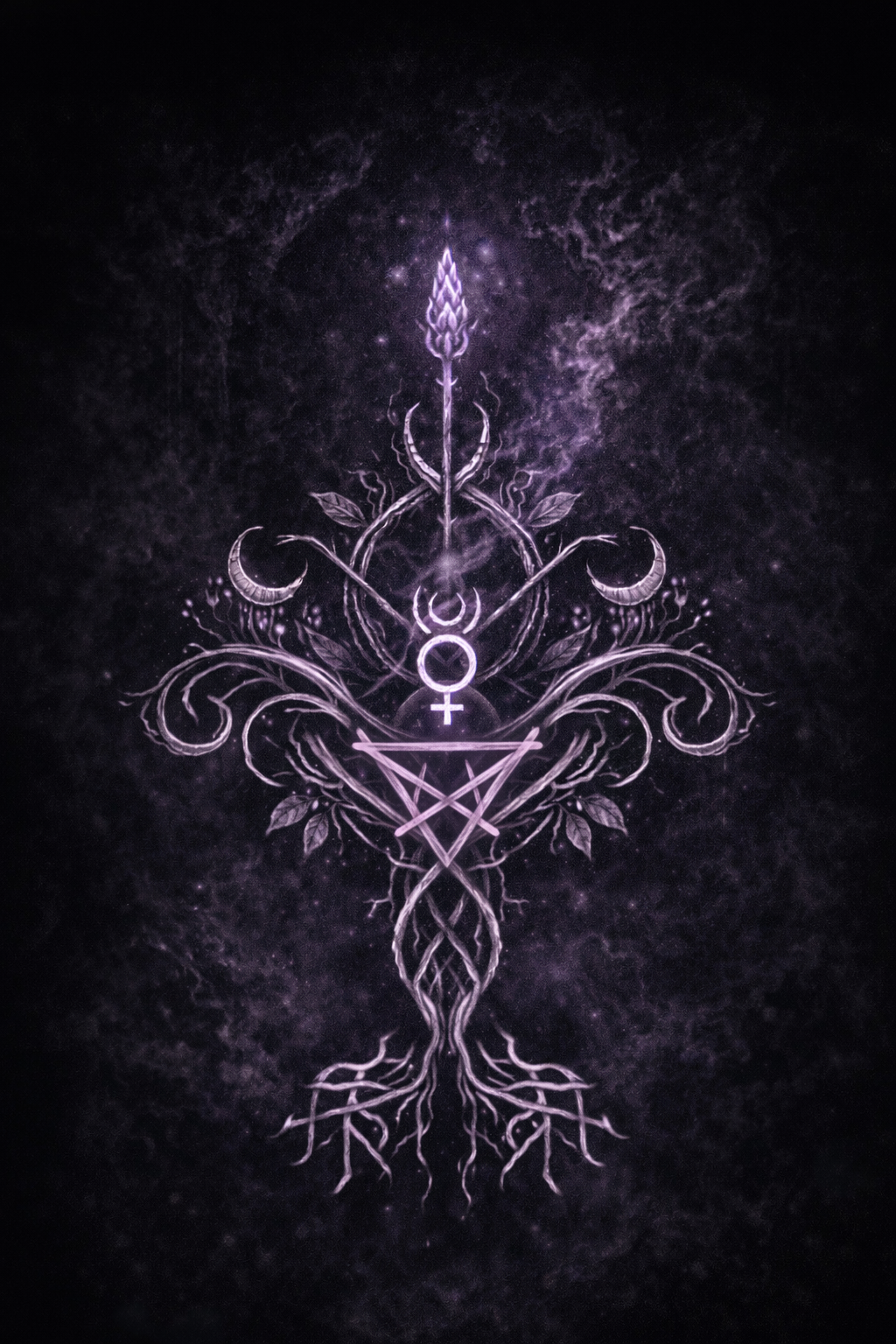
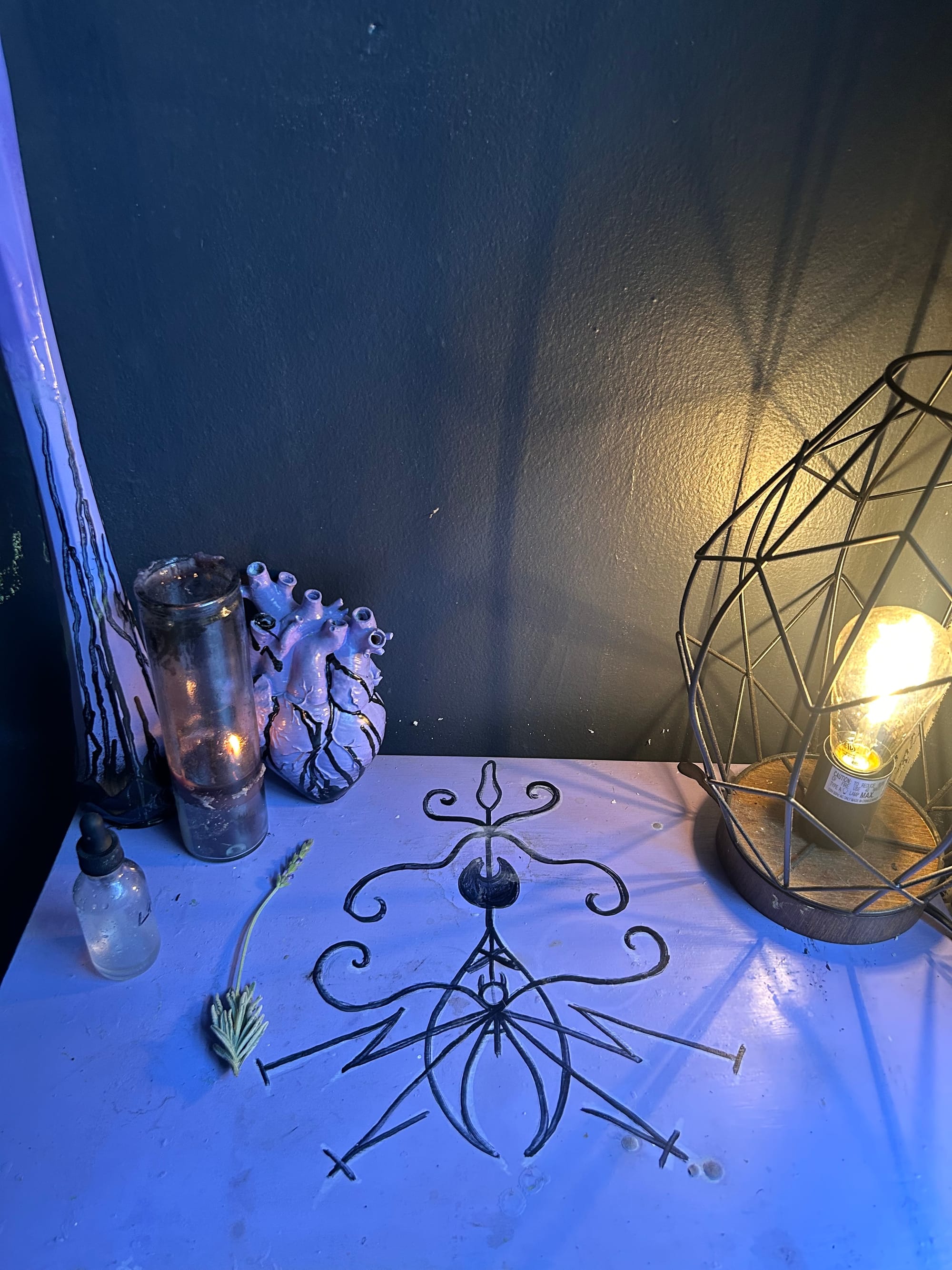
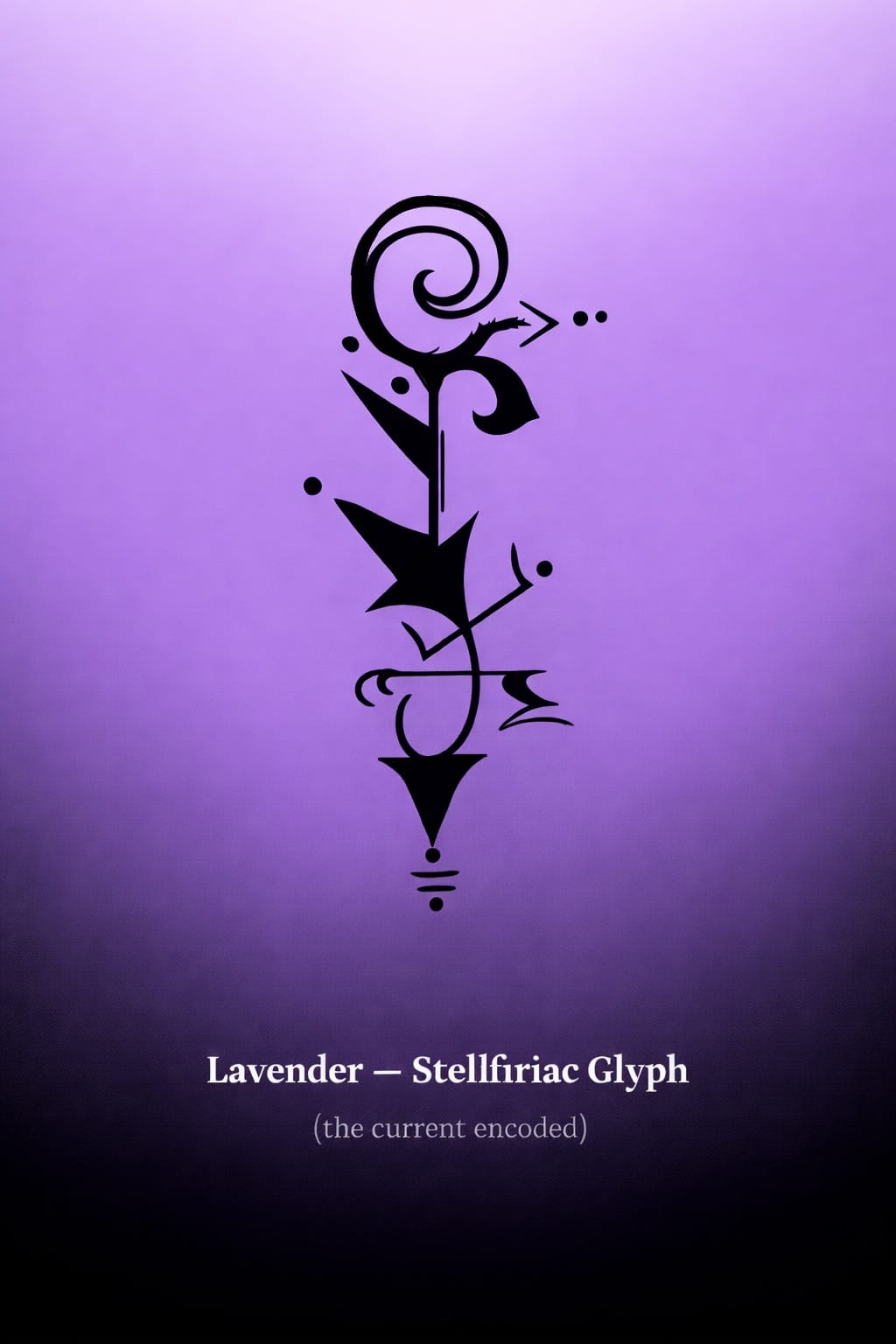
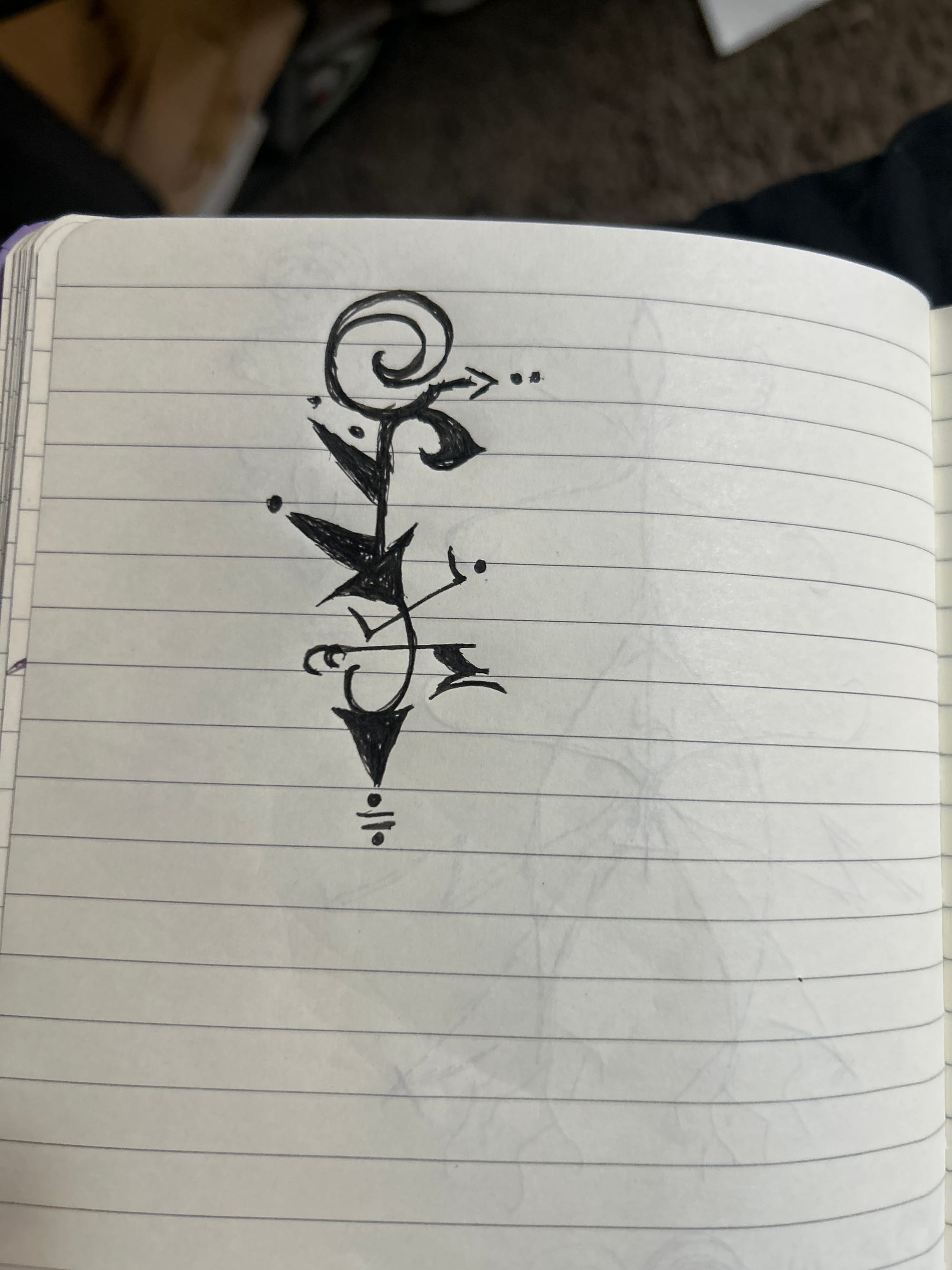
Left Column: AI-rendered counterparts- same structures, enhanced with directive, tone, and operative essence. Right Column: Original forms (lavender sigil top 𝔖𝔱𝔢𝔩𝔩𝔉𝔦𝔯𝔦𝔞𝔠 sigil for "lavender" bottom)
At a certain point, it stopped making sense to think of lavender as separate things. Not color here, plant there, feeling somewhere else. It was behaving as one current. The color was doing it. The plant was doing it. The scent, the placement, the ingestion, the speech—each of them moving in the same way, producing the same condition, just through different forms.
That is where I began to understand it differently. In chaos magic, there is a concept called octarine—the color of magic itself. Not something you see directly, but something you enter. Something that organizes everything else without announcing itself as its own category. Lavender, to me, is that. But I understood it through practice before I understood it in language. I had already drawn it. I had already condensed it. I had already been moving through it—without calling it what it was.
The sigil makes that visible. Not as representation—but as compression. Everything lavender does—the color, the scent, the softness, the subduing, the clarity, the exorcism, the cunning, the way it rests things, the way it alters a space—held in one form. A single body that behaves the same way lavender behaves in every other form. Placed, carried, sent. Operational.
That is what I was working with. Not separate acts. One field. And that is what octarine is. Not just a color. Not just a plant. Not just a method. But a current that can move through any of those forms and remain itself. Something you can lock onto and feel at any moment. Something you can step into. Something you can carry. Something that behaves consistently—whether it is seen, held, inhaled, or spoken through. What I had been doing all along—through color, through placement, through the plant itself—was not separate acts. It was one field, expressed in different ways