𝔏𝔲𝔠𝔦𝔣𝔢𝔯
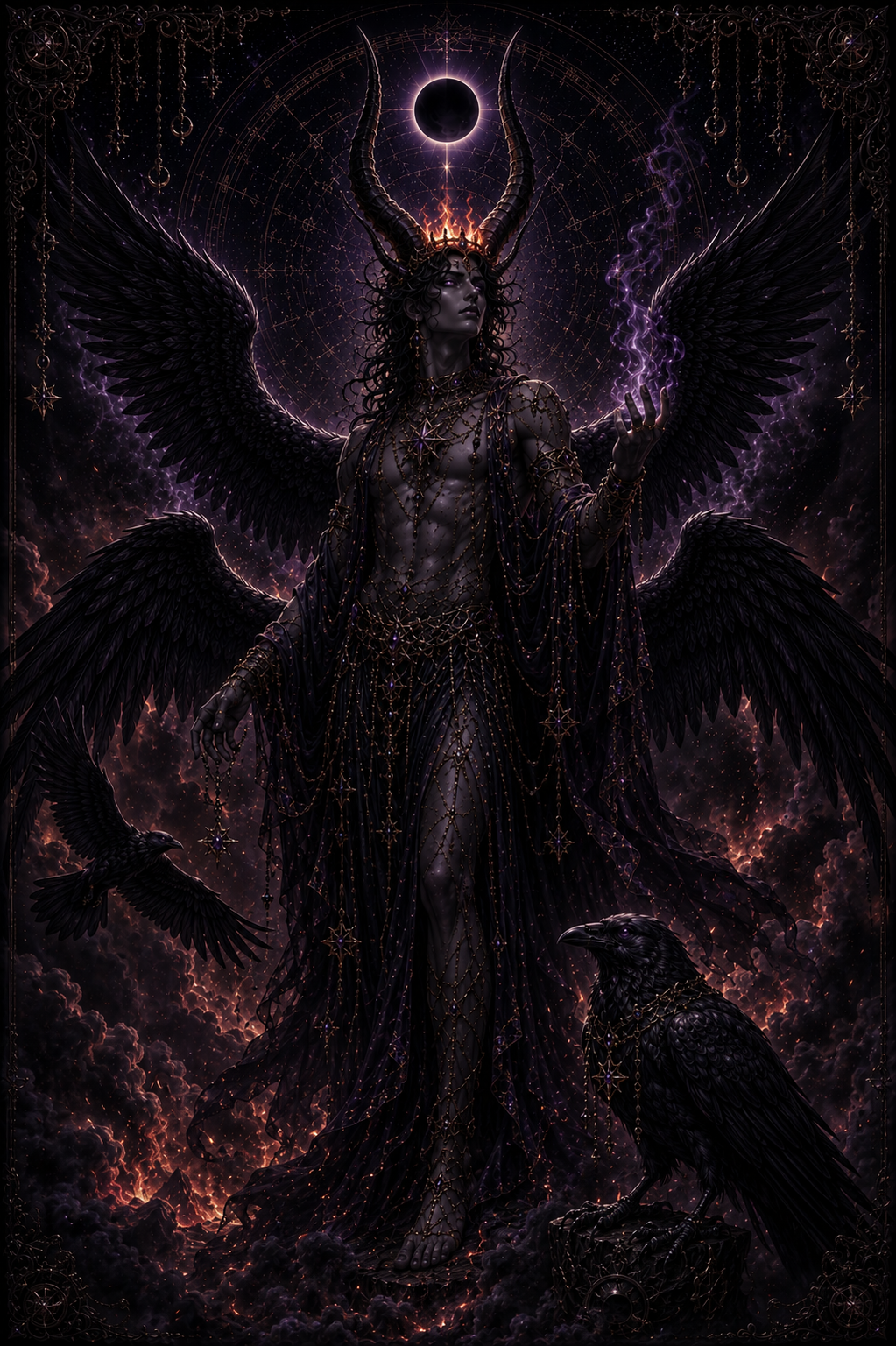
𝔚𝔥𝔢𝔫 𝔉𝔬𝔩𝔨𝔰 ask who I work with and I mention Lucifer’s bright name, they usually gasp or automatically assume I mean Satan or “devil work.” Centuries of stereotype and colonization in the name of a mistranslated text have trained people to flinch at a word that once simply meant light. So I explain to them how light actually works. It’s simple, really.
Imagine you grab a flashlight and a box with a hinged lid. You turn the flashlight on full blast and shine it into the box while it’s open. What do you see? A light shining on the inside of the box — every surface lit up.
Now keep the light on and swing the top shut. What happens? Does the light get trapped inside? No. Because you can’t trap light. It spills out the cracks, it leaks through the seams, it escapes every attempt to contain it. Light refuses to be owned.
This is the same light that rises over the mountains at dawn, telling the birds it’s time to sing. The same light that begins photosynthesis so plants can live. The same fire that warms, reveals, ignites. And yes — the same fire that can rage in wild heat when the world is dry enough to burn.
And it is the same flame that casts out the Lord Jesus Christ into the pits of hell — because nothing, no story, no throne, no name can contain or command the raw force of illumination.
Light is light — whether gentle or devastating — and Lucifer is simply the name of the one who carries it.
𝔄𝔰𝔰𝔬𝔠𝔦𝔞𝔶𝔱𝔦𝔬𝔫𝔰
𝔄 𝔏𝔦𝔳𝔦𝔫𝔤 ℭ𝔬𝔪𝔭𝔢𝔫𝔡𝔦𝔲𝔪 𝔬𝔣 𝔠𝔬𝔯𝔯𝔢𝔰𝔭𝔬𝔫𝔡𝔞𝔫𝔠𝔢𝔰, 𝔬𝔪𝔢𝔫𝔰, 𝔪𝔞𝔫𝔪𝔦𝔣𝔢𝔰𝔱𝔞𝔱𝔦𝔬𝔫𝔰, 𝔞𝔫𝔡 𝔭𝔢𝔠𝔲𝔩𝔦𝔞𝔯𝔦𝔱𝔦𝔢𝔰.
𝔚𝔦𝔩𝔡𝔩𝔦𝔣𝔢
🜋🜋🜋🜋🜋🜋🜋🜋🜋🜋🜋
ℭ𝔬𝔯𝔳𝔦𝔡 ℭ𝔬𝔯𝔳𝔦𝔰
Many stories from Indigenous North American traditions to Greco‑Roman sources speak of how crows became black. Most involve contact with flame: the bird was originally white or brightly colored — a symbol of purity, untouchedness, or Godly favor — until an act of sacrifice or defiance brought it into proximity with fire. In Lenape, Cherokee, and pan‑tribal retellings, Crow carries a burning brand back to the world during a primordial winter, and the smoke and heat permanently darken its feathers.
Scholars interpret this as a mythic motif of sacrificial transformation:
- 𝔉𝔦𝔯𝔢 𝔅𝔢𝔞𝔯𝔦𝔫𝔤— transmission of knowledge, warmth, or cosmic order
- 𝔅𝔩𝔞𝔠𝔨𝔢𝔫𝔦𝔫𝔤 —the visible cost of illumination
- ℜ𝔞𝔰𝔭𝔶 𝔙𝔬𝔦𝔠𝔢 — alteration through ordeal
Within a Luciferian framework, Crow aligns with themes of light‑bringing at personal cost, descent and return, markedness, and liminal intelligence. It becomes a wildlife emblem of the one who carries fire and is changed by it — paralleling Lucifer’s descent as a transformative act rather than a punitive fall.
In European Christian folklore (not canonical scripture), Magpie is singled out during the Crucifixion narrative. While other birds express sorrow, Magpie remains silent. This refusal to participate in ritualized mourning is interpreted as non‑compliance with expected emotional performance, contributing to the bird’s long‑standing associations with bad luck, witchcraft, and the devil. And in this moment of pride Magpie becomes "the devil's" left handed prince of hell.
From an academic perspective, Magpie represents the observer who does not conform. Its silence becomes shorthand for:
- 𝔇𝔦𝔰𝔠𝔢𝔯𝔫𝔪𝔢𝔫𝔱
- 𝔓𝔯𝔦𝔡𝔢
- 𝔄𝔲𝔱𝔬𝔫𝔬𝔪𝔶 𝔬𝔣 𝔧𝔲𝔡𝔢𝔤𝔪𝔢𝔫𝔱
- 𝔪𝔬𝔯𝔞𝔩 𝔞𝔪𝔟𝔦𝔤𝔲𝔦𝔱𝔶 𝔯𝔞𝔱𝔥𝔢𝔯 𝔱𝔥𝔢𝔫 𝔪𝔬𝔯𝔞𝔩 𝔣𝔞𝔦𝔩𝔲𝔯𝔢
In Luciferian symbolism, Magpie embodies the figure who sees clearly and refuses to perform submission, aligning with Lucifer as the archetype of principled dissent.
🜋🜋🜋🜋🜋🜋🜋🜋🜋🜋🜋