ℌ𝔢𝔨𝔞𝔱e
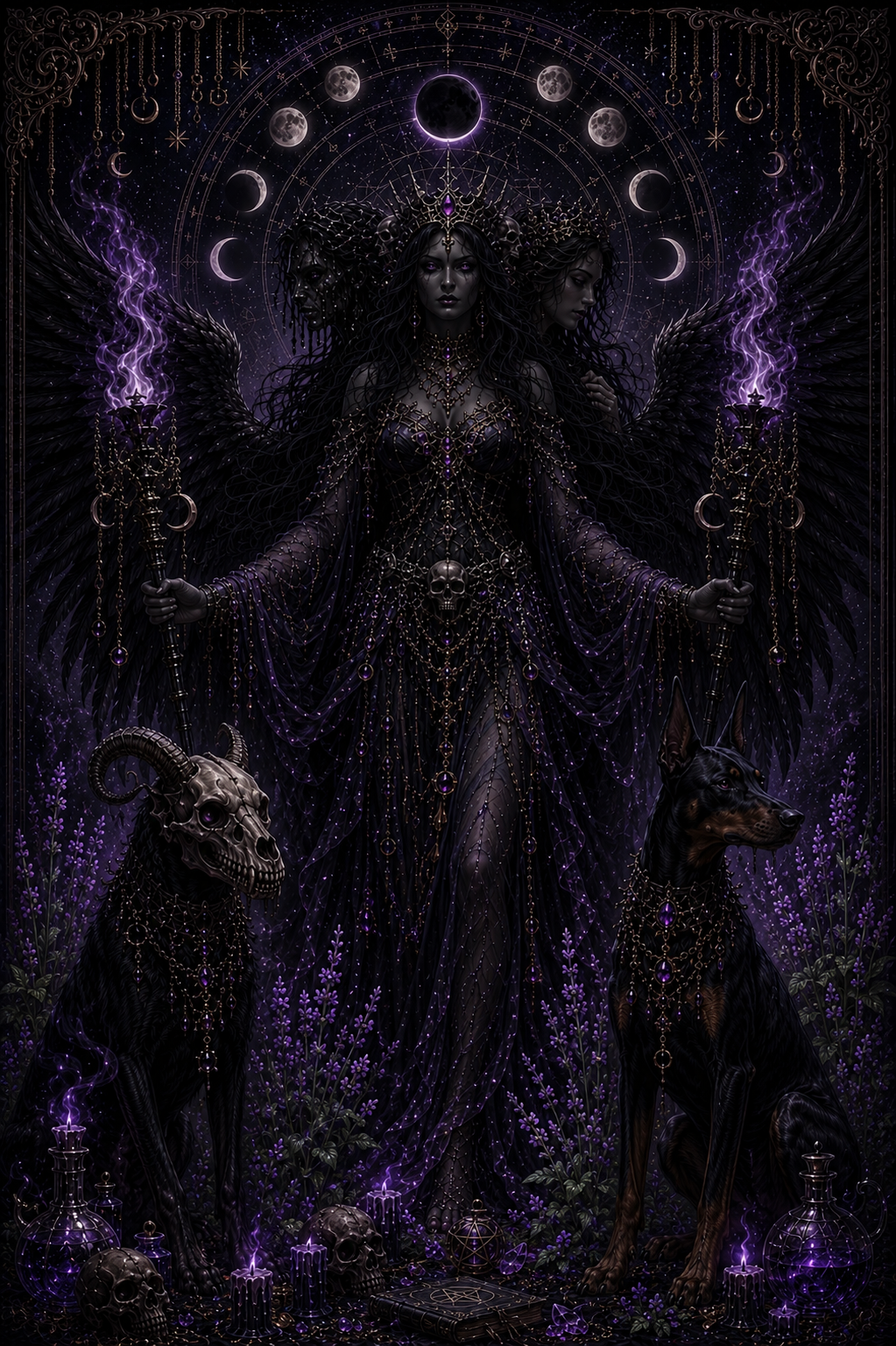
ℌ𝔢𝔨𝔞𝔱𝔢: 𝔗𝔥𝔢 𝔒𝔩𝔡𝔢𝔰𝔱 𝔉𝔩𝔞𝔪𝔢 ℑ𝔫 𝔱𝔥𝔢 𝔇𝔞𝔯𝔨
𝔉𝔯𝔬𝔪 𝔅𝔯𝔬𝔪𝔫𝔷𝔢 𝔄𝔤𝔢 𝔄𝔫𝔞𝔱𝔬𝔩𝔦𝔞 𝔱𝔬 𝔱𝔥𝔢 𝔐𝔬𝔡𝔢𝔯𝔫 𝔚𝔦𝔱𝔠𝔥'𝔰 𝔄𝔩𝔱𝔞𝔯
Hekate is often introduced as a “Greek goddess,” but her story begins far earlier, in a land that is now southwestern Turkey. Long before Hesiod wrote her name, long before Athens placed her statues at crossroads, she was already moving through the hills and sanctuaries of ancient Caria — a region whose spiritual landscape predates classical Greece by millennia.
To grasp Hekate and her status of Titaness becoming familiar with her age is essential.
ℑ. 𝔅𝔢𝔣𝔬𝔯𝔢 𝔊𝔯𝔢𝔢𝔠𝔢: 𝔗𝔥𝔢 𝔄𝔫𝔞𝔱𝔬𝔩𝔦𝔞𝔫 𝔊𝔬𝔡𝔡𝔢𝔰𝔰 (𝔠. 3000-1200 𝔅ℭ𝔈)
Archaeology places Hekate’s earliest cult center at Lagina, in Caria — a site inhabited since the Early Bronze Age (around 3000 BCE).
This region was home to powerful local goddesses tied to:
- thresholds and boundaries
- the underworld
- night processions
- protection of the household and city
Hekate emerges from this world: a liminal, torch‑bearing guardian whose worship was deeply rooted in Anatolian soil long before Greek poets adopted her.
Her sanctuary at agina would later become one of the most important ritual centers in the ancient world — a place where thousands gathered for torchlit processions honoring the goddess who walked between realms.
ℑℑ. 𝔉𝔦𝔯𝔰𝔱 𝔄𝔭𝔭𝔢𝔞𝔯𝔞𝔫𝔠𝔢 𝔦𝔫 𝔊𝔯𝔢𝔢𝔨 𝔏𝔦𝔱𝔢𝔯𝔞𝔱𝔲𝔯𝔢 (𝔠. 700 𝔅ℭ𝔈)
Hekate’s first textual appearance is in Hesiod’s Theogony (c. 700 BCE).
But she does not enter Greek myth as a minor figure. She arrives already powerful:
- Daughter of the Titans Perses and Asteria
- Honored by Zeus above all others
- Granted dominion over sky, earth, and sea
This is unusual. Greek poets rarely give foreign goddesses such sweeping authority unless their cult is already ancient and respected.
Hesiod’s reverence is a clue:
Hekate was not created by Greek religion — she was adopted into it as a Titaness, due to her established weight in a spiritual sense. Her dominion 3 fold. Her prowess understood.
ℑℑℑ. 𝔗𝔥𝔢𝔯 𝔏𝔦𝔪𝔦𝔫𝔞𝔩 𝔊𝔬𝔡𝔡𝔢𝔰𝔰 𝔒𝔣 𝔱𝔥𝔢 ℭ𝔩𝔞𝔰𝔰𝔦𝔠𝔞𝔩 𝔚𝔬𝔯𝔩𝔡 (700-400𝔅ℭ𝔈)
As Greek religion evolves, Hekate’s identity shifts toward the spaces she naturally rules:
- crossroads
- thresholds and doorways
- night wandering spirits
- torches and guiding light
Small pillars called Hecataea, much like the Hermaea, began as simple mounds of stones placed at crossroads, road junctions, city gates, and property boundaries. Both served practical and sacred purposes: guiding travelers, warding off harmful spirits, and receiving offerings—especially those given to Hermes. Their shared form and function give weight to the idea of a deeper tie between Hekate and Hermes, whether as siblings born from the same threshold, lovers whose domains intertwine so completely that their boundaries blur, or as a relationship ancient people sensed but could not easily name. These Hecataea appear at the liminal edges of the world—crossroads, gates, and thresholds—marking Hekate as a guardian of boundaries both physical and unseen, while echoing the very same spaces Hermes himself protects.
She becomes the one who sees what others cannot, who stands where worlds meet.
ℑ𝔙. ℌ𝔢𝔨𝔞𝔱𝔢 𝔐𝔦𝔰𝔱𝔯𝔢𝔰𝔰 𝔬𝔣 𝔓𝔥𝔞𝔯𝔪𝔞𝔨𝔬𝔦
the poison garden opens at the edge of the underworld
As the Classical world gives way to the Hellenistic, Hekate’s domain expands into the realm of pharmaka — the herbs, poisons, and transformative substances used in magic. This is the period where she becomes the patroness of those who gather plants at night, who work with roots that grow in grave‑soil, who understand that every cure has a shadow and every poison has a purpose.
Writers begin to speak of her in the company of herb‑women, necromancers, and night‑wanderers. Plants associated with death, trance, or altered sight — aconite, henbane, mandrake — fall under her protection. She becomes the goddess who knows which plants open the senses, which silence them, and which carry a soul across thresholds.
This is not the garden of healing.
It is the garden of transformation, where danger and revelation grow side by side.
By the time the Hellenistic world matures, Hekate stands as Mistress of Pharmaka:
the one who governs the plants that belong to the dead, the poisons that unveil hidden worlds, and the knowledge that can both protect and undo.
𝔙. 𝔗𝔥𝔢 𝔗𝔯𝔦𝔭𝔩𝔢 𝔊𝔬𝔡𝔡𝔢𝔰𝔰 𝔈𝔪𝔢𝔯𝔤𝔢𝔰 (400-100 𝔅ℭ𝔈)
By the Classical and early Hellenistic periods, Hekate’s iconography transforms:
- the moment she becomes the goddess we recognize in the dark
By the Classical period, Hekate’s image begins to shift. The older Titaness — honored for her reach across sky, sea, and earth — condenses into something sharper, more liminal. Artists start giving her three bodies, or three faces, set at the meeting of roads. Not a trinity, not a maiden‑mother‑crone, but a functional geometry: a goddess who sees in all directions at once, who stands where paths cross and worlds touch.
Her attributes settle into place with the same clarity:
- Keys for thresholds and the locked places of the dead
- Torches for moving through darkness, for initiation, for revelation
- Serpents for chthonic knowledge and the old, coiled wisdom beneath the earth
- Dogs for warning, for protection, for the restless dead that follow her at night
These are not decorative symbols. They are the tools of a goddess who governs passage, opening, and the unseen.
As the Hellenistic world unfolds, her role deepens further into the chthonic. She becomes the one invoked at the edges of things:
for necromancy, for communication with the dead, for protection against spirits that wander without rest. Shrines rise at crossroads and doorways. Offerings are left at the dark moon. Her name threads through curse tablets, mystery rites, and the magical papyri — always as the one who guides, guards, or reveals.
This is the Hekate modern practitioners recognize:
a goddess of thresholds, of night‑flame, of the places where the living and the dead brush past one another.
A guardian of transitions.
An initiator.
A presence that stands exactly where the world thins.
And she is still evolving. Every generation meets her at a different crossroads
𝔙ℑ. 𝔗𝔦𝔪𝔢𝔏𝔦𝔫𝔢 𝔖𝔲𝔪𝔪𝔞𝔯𝔶
🜋3000–1200 BCE — Anatolia (modern Turkey)
Early cult roots in Caria; Lagina sanctuary region inhabited since the Early Bronze Age.
🜋c. 700 BCE — Greece
First literary appearance in Hesiod’s Theogony; cosmic authority.
🜋700–400 BCE — Classical Greece
Liminal goddess of crossroads, torches, spirits.
🜋400–100 BCE — Hellenistic Period
Triple‑formed goddess; deep chthonic associations.
🜋100 BCE–300 CE — Ptolemaic Egypt
Queen of Ghosts; major magical deity.
🜋0–400 CE — Roman Era
Crossroads, magic, household protection.
🜋Medieval–Modern
Survives in magic, folklore, and modern witchcraft
𝔄𝔰𝔰𝔬𝔠𝔦𝔞𝔱𝔦𝔬𝔫𝔰
𝔄 𝔈𝔳𝔬𝔩𝔳𝔦𝔫𝔤 𝔏𝔢𝔡𝔤𝔢𝔯 𝔬𝔣 ℭ𝔬𝔯𝔯𝔢𝔰𝔭𝔬𝔫𝔡𝔞𝔫𝔠𝔢𝔰, 𝔒𝔪𝔢𝔫𝔰, 𝔐𝔞𝔫𝔦𝔣𝔢𝔰𝔱𝔞𝔱𝔦𝔬𝔫𝔰, 𝔞𝔫𝔡 𝔓𝔢𝔠𝔲𝔩𝔦𝔞𝔯𝔱𝔦𝔢𝔰